Who I Am
I'm Kabiru Shaibu, a full-stack product engineer focused on building reliable, user-friendly software that solves real business problems and remains maintainable as products grow.
Frontend-focused Full-Stack Product Engineer. I design and ship accessible SaaS and Web3 products with production quality and scale in mind.
Specializing in TypeScript, React, Next.js, Node.js, Python, Supabase and Solana — owning the path from product idea to reliable release.
I'm Kabiru Shaibu, a full-stack product engineer focused on building reliable, user-friendly software that solves real business problems and remains maintainable as products grow.
I build customer-facing SaaS products and internal operational tools using React, TypeScript, Node.js, PostgreSQL, and modern cloud technologies. My recent work includes loyalty infrastructure, prediction platforms, secure dashboards, and workflow automation.
I take ownership from product discovery and architecture through implementation, testing, deployment, and continuous improvement. I collaborate closely with stakeholders and engineering teams to turn business requirements into practical, scalable solutions.
I balance delivery speed with security, usability, and long-term maintainability. I use AI-assisted development to improve planning, implementation, debugging, and documentation without replacing careful engineering judgement.
Clarity, ownership, and honest trade-offs. I prefer simple systems that teams can reason about, feedback that improves the product, and collaboration that keeps users and business outcomes at the centre of every decision.
I do my best work where product thinking meets engineering craft — cross-functional teams, real users, and systems that need to stay reliable as they grow. I enjoy turning ambiguity into shipped, well-structured software.
Current capability
Accessible interfaces and product-quality UX
I ship production UIs with React and TypeScript — clear component architecture, accessibility, and performance that holds up beyond demos.
Core strengths
Working knowledge
Flagship work across Web3 loyalty systems, prediction markets and marketplace products — focused on real product problems and production architecture.
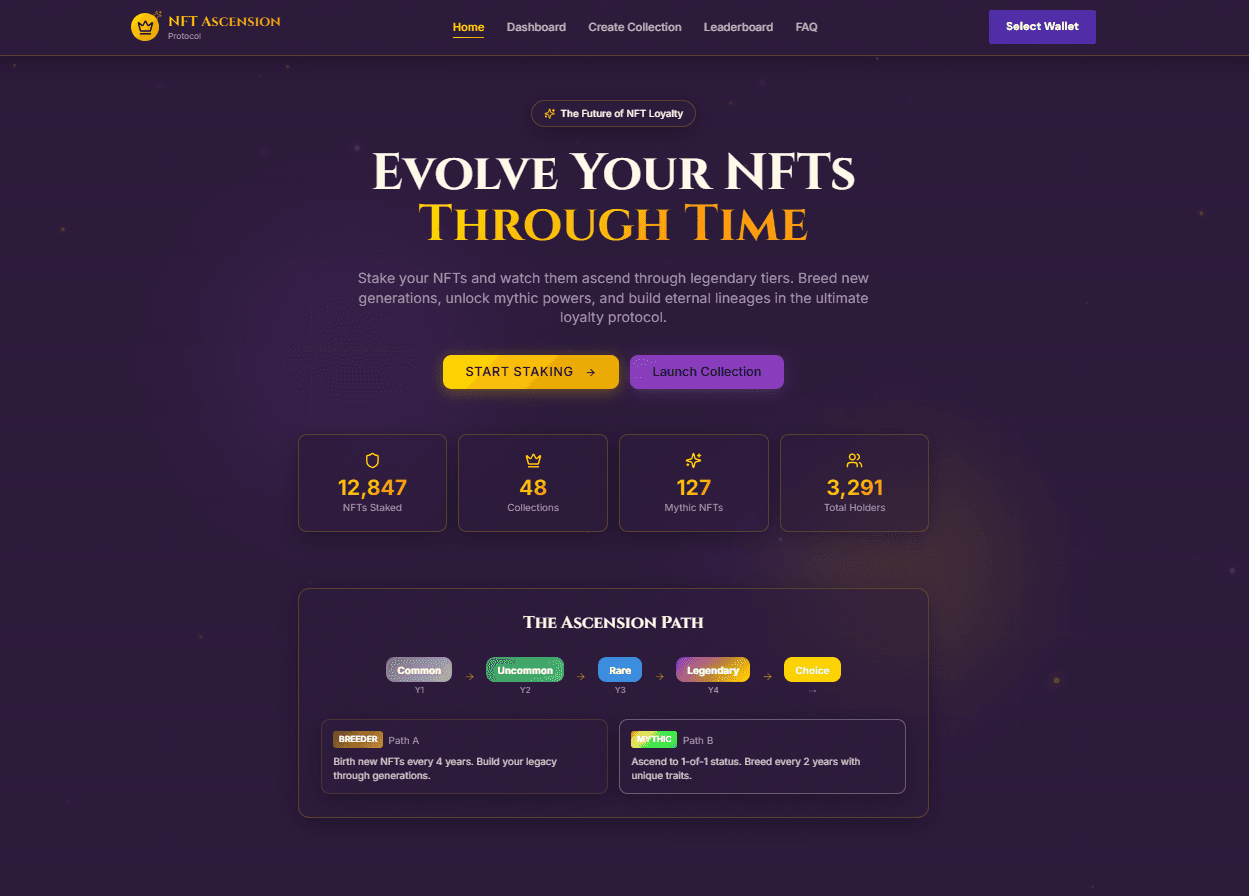
Web3
NFT communities struggle to retain holders beyond short-term hype. Stay Loyal is a Solana loyalty engine that turns staking and engagement into on-chain reputation and XP, with wallet authentication and Supabase/PostgreSQL-backed data using Metaplex tooling.
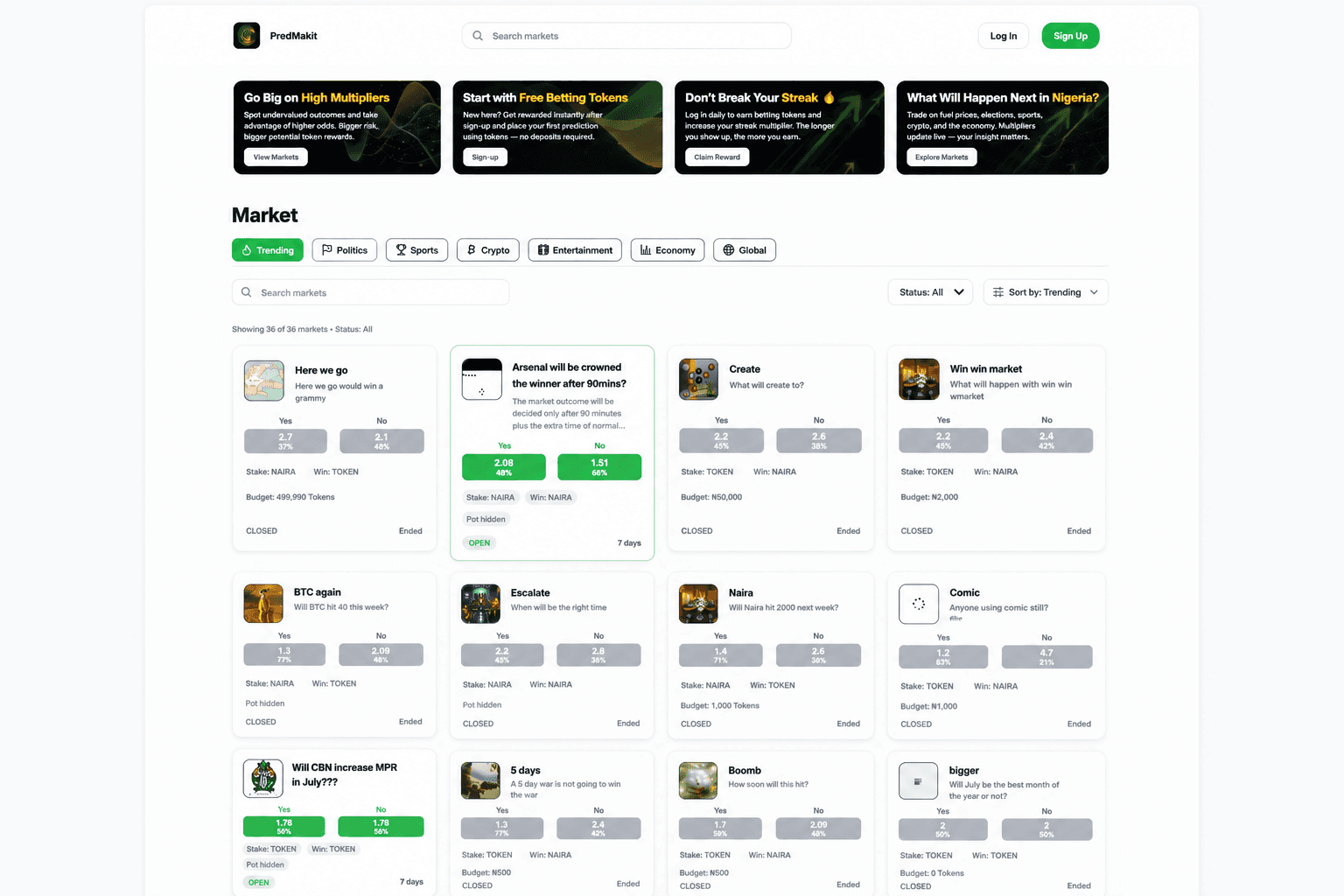
Gaming
A prediction-market product where users place YES/NO positions using TOKEN or NAIRA. Built with a Vite frontend, Fastify/Node.js API layer, and Supabase for application data and authentication.
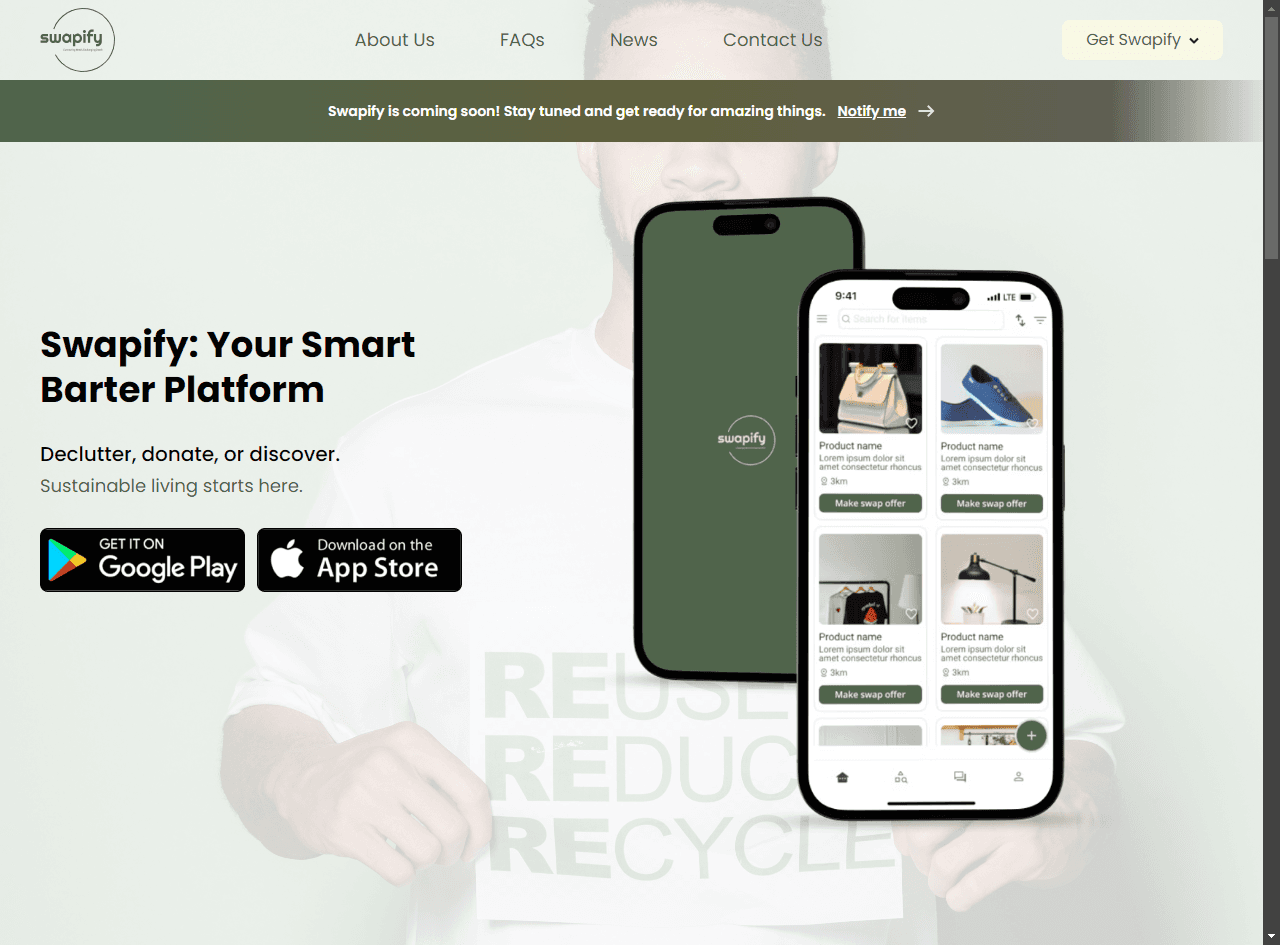
Marketplace Platforms
A barter and donation marketplace for exchanging or giving unused items. Focused on marketplace information architecture, responsive React/Next.js UI, and a clear path from listing to discovery.
Mentors and teachers whose courses and communities have shaped how I learn, build, and ship as a product engineer.
PAPAFAM
Sonny Sangha’s full-stack learning community — real-world builds, coaching energy, and developers shipping together.
Mentored by Sonny Sangha
Full-stack · Next.js · Product builds

Web Dev Done Right
Jonas Schmedtmann’s teaching world for HTML, CSS, JavaScript, React and Node — structured courses and student community.
Mentored by Jonas Schmedtmann
JavaScript · React · Node.js · CSS

ZTM Academy
A career-focused developer community around Zero To Mastery Academy — courses, accountability, and job-ready skill paths.
Mentored by Andrei Neagoie
Career paths · Full-stack · AI · Job prep

Programming with Mosh
Mosh Hamedani’s clear, practical courses and learning paths — from fundamentals to professional frontend, backend and mobile.
Mentored by Mosh Hamedani
Clean code · React · Node · Career skills

Dr. Angela Yu
Angela Yu’s App Brewery — beginner-friendly bootcamp-style learning across web and mobile, built around hands-on projects.
Mentored by Dr. Angela Yu
Web · iOS · Full-stack · Projects

The visual system behind every screen in this portfolio — decided once, then reused everywhere instead of re-invented per page.
One disciplined accent against deep neutral surfaces. Every screen — hero, cards, buttons, focus states — pulls from the same seven tokens, so mood and contrast stay predictable at every depth.
A display face for identity, a body face for reading. Size, weight and letter-spacing carry meaning — eyebrows stay quiet, headings carry the weight, body copy stays calm.
Eyebrow label
Heading line
Body copy stays calm and readable beneath a bold display heading.
Two container widths run the whole site — a wider band for the hero and nav, a narrower one for reading content — so the eye always knows where a page “ends.”
Nav & hero · max-w-7xl
Content sections · max-w-6xl
A predictable scale — 4px steps compounding into 8/12/16/24/32/48/64 — instead of arbitrary pixel values, so padding and gaps never fight each other.
Every block reads top-down: label, then headline, then supporting copy, then a single action — never more than one loud element competing for attention.
Step 01
Primary action
Supporting detail comes third, quietly.
The same button, card and focus-ring primitives are reused from the hero to the footer — a new section adopts the existing system instead of inventing its own.
The same six principles, applied to the assets a brand or launch actually needs.
Hero, proof, feature breakdown, pricing and one clear call to action — built to convert, not just to look good.
Type-driven and mark-based systems, built to hold up at favicon size and on a hero banner alike.
A clear narrative arc, one idea per slide, one consistent grid and type system across every page.
On-brand graphics sized for the platform they live on, sharing colour and type with the product they promote.
Landing sections, email headers and ad creative that read as one brand with the product behind them.
Skills I treat as one discipline — how I use AI to design, build and operate real systems, not just prompt a chatbot.
Context
Feed the model the right files, constraints and prior decisions — not the whole repo.
Small Steps
Ship reviewable, revertible increments instead of one giant AI-generated diff.
Review
Read every line before it merges — AI proposes, I stay accountable for what ships.
Tests
Generated code earns trust through tests, not through how confident it sounds.
Tokens
Cost and latency are a token-counting problem before they're a code problem.
Context Window
What fits, what gets summarised, what gets dropped — decided deliberately, not by accident.
Message Roles
System, user, assistant and tool messages each carry a different kind of authority.
Trade-offs
Bigger model vs. faster model, more context vs. lower cost — every choice trades something off.
Ingestion
Getting messy source data into a usable, versioned shape.
Chunking
Splitting content so each piece is retrievable and still means something alone.
Embeddings
Turning chunks into vectors that actually cluster by meaning.
Retrieval & Re-ranking
Finding the right chunks fast, then re-ordering them for relevance before they reach the model.
Tools
A small, well-typed set of actions for the model — not open-ended shell access.
MCP
Standardised tool/context servers so agents plug into real systems instead of one-off glue code.
Workflows
Deterministic multi-step pipelines for anything with a known, repeatable shape.
Agents
Reserved for genuinely open-ended tasks, where the next step depends on what the model just found.
Evals
Output quality measured against real examples, not vibes.
Reliability
Timeouts, retries, fallbacks — an LLM call is a network call that can fail.
Security
Model output and tool input are treated as untrusted until proven otherwise.
Cost Control
Spend tracked per feature, not just per month, so cost stays a design input.
Open to roles where strong frontend craft meets full-stack product ownership. Let's talk.
Tallinn, Estonia